
Business
Multi-State Payroll Processing: Essential Insights for Growing Businesses

Published
4 months agoon
By
Hamza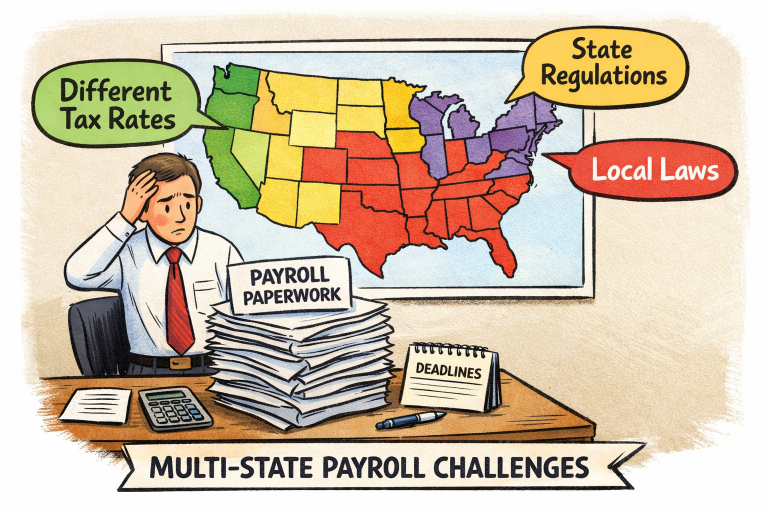
Key Takeaways
- Comprehending the fundamentals of multi-state payroll is essential for compliance and accuracy.
- Businesses need to adapt to differing state tax laws and employment regulations to maintain proper payroll records.
- Incorporating expert advice and automated technology can streamline payroll processes and minimize errors.
Table of Contents
- Understanding Multi-State Payroll
- Compliance Challenges in Multi-State Payroll
- Navigating Varying State Tax Laws
- Understanding State-Specific Employment Regulations
- Best Practices for Multi-State Payroll Processing
- Leveraging Technology for Efficient Payroll Management
- Case Study: Successful Multi-State Payroll Implementation
- Conclusion
Expanding a business across state lines offers new opportunities and markets, but it also brings a host of payroll challenges that employers must manage carefully. Ensuring accurate payroll is not just about cutting checks; it means navigating a complex patchwork of state laws, tax requirements, and compliance issues. For businesses facing these hurdles, understanding multiple state payroll regulations is crucial for staying compliant and avoiding costly errors.
Whether embracing remote workforces or opening satellite offices in different states, the importance of proper payroll management cannot be overstated. Payroll errors can not only result in financial penalties but also cause employee dissatisfaction. Employers must comply with registration requirements, track state-specific tax laws, and meet varying employment regulations in each jurisdiction. The stakes are high, so a methodical approach is required to maintain accuracy and compliance at every level.
Another often-overlooked aspect is that each state requires routine updates and communication with its tax department. State-by-state differences can influence how payroll should be processed, even for similar roles within a single company. This complexity underscores the need for clarity, consistency, and the right technological support to keep payroll operations seamless.
Grasping the basics of multi-state payroll helps your business avoid legal pitfalls and enhance workforce satisfaction. As workforce mobility increases, so does the need to understand how to efficiently manage payroll across states, keeping up with legislative trends and local nuances.
Understanding Multi-State Payroll
Multi-state payroll occurs when an employer manages compensation and tax withholding for employees located in more than one state. This arrangement has become increasingly common as companies embrace remote workforces and expand into new geographic markets. Every state has its own payroll tax rules and employment mandates, so what works in one state may not be sufficient in another.
To ensure proper payroll management, businesses must be aware of where their employees are working and what obligations arise in those states. This might include understanding residency status, travel assignments, and remote work arrangements, all of which have a direct impact on payroll requirements. Properly identifying these factors helps employers fulfill their legal duties and avoid penalties.
Compliance Challenges in Multi-State Payroll
Operating across multiple states introduces new compliance risks for employers. Several core challenges include:
- Tax Withholding:Each state has its own criteria for how much state income tax should be withheld, and some require additional local taxes as well. Employers must ensure they are deducting the correct amounts for each employee based on their work location and residency.
- Unemployment Insurance:Each state requires businesses to register and pay unemployment insurance taxes for workers employed within its borders. Failing to register or remit taxes correctly can lead to audits and fines.
- State Registration:When hiring in a new state, employers often need to register with state workforce agencies, submit required paperwork, and obtain relevant permits or business licenses before processing payroll for local employees.
Each of these requirements can change periodically, especially in states that regularly revise their tax codes and labor laws. Employers should regularly audit payroll compliance to identify gaps and update processes as needed.
Navigating Varying State Tax Laws
State tax laws are among the most intricate pieces of the payroll puzzle. Some states, such as Illinois and Wisconsin, have reciprocal agreements. These allow employees who live in one state and work in another to pay taxes only in their state of residence. However, not all bordering states share reciprocal arrangements, so employers must handle withholding and reporting obligations accordingly.
In addition, tax thresholds can be based on factors such as the number of days worked in a state or the amount of income earned there. Payroll professionals need to be proactive in identifying employees whose work travel creates new state tax obligations and modify withholding accordingly to avoid tax mismatches.
Understanding State-Specific Employment Regulations
Beyond state tax laws, employers are responsible for complying with workplace regulations that vary from state to state. These may include minimum wage rates, overtime requirements, required rest and meal breaks, and mandated types of paid leave. For example, while California mandates daily overtime, other states generally follow weekly overtime requirements.
Staying informed about changing statutes is vital. Regularly reviewing government and industry updates will keep your company aligned with the latest regulatory changes, minimize risks, and build employee trust.
Best Practices for Multi-State Payroll Processing
- Stay Informed:Designate someone within your business to track regulatory updates and maintain a current database of requirements for all states where you employ workers.
- Centralize Payroll Processing:Consolidate payroll data into a single system if possible. A uniform system can reduce discrepancies and simplify reporting and auditing activities across states.
- Consult Experts:Work with payroll or human resources experts who specialize in multi-state compliance and taxation. They can provide timely advice and help your business avoid costly errors.
Leveraging Technology for Efficient Payroll Management
Payroll software capable of managing multi-state complexity is essential as operations grow. Such systems automatically update tax tables, calculate accurate withholding for each employee based on their work location, and generate state-specific reports. Many also offer compliance alerts and facilitate electronic filing of tax forms, making it easier to stay compliant as laws evolve. Technology investment in payroll can save time, reduce errors, and keep your business audit-ready at all times.
Case Study: Successful Multi-State Payroll Implementation
One example of multi-state payroll success is a mid-sized consulting firm that expanded its team across five states during a year of rapid growth. The company initially struggled to juggle varying tax and employment law requirements. By transitioning to a cloud-based payroll provider and enlisting the support of an outside firm specializing in state compliance, the company streamlined operations, eliminated late filings, and saw a marked reduction in payroll errors. Employees were paid accurately and on time, and the leadership team felt confident they were meeting obligations in every state.
Conclusion
Multi-state payroll is a vital consideration for any business pursuing growth beyond a single state. The complexity of laws and regulations across the United States requires employers to be proactive, knowledgeable, and committed to ongoing compliance. By leveraging expert guidance, adopting the right technology, and staying alert to legislative shifts, companies can manage payroll efficiently and support their expanding workforces without disruption.
You may like

Mastering Essential Communication and Research Skills for Modern Business

Top 5 Test Automation Tools: 2026 Comparison

Reclaiming Your Life: The Comprehensive Guide to Choosing a Rehab Center for Alcoholics

How Franchisors Support Pet Store Franchise Owners

How TMS Treatment in LA Helps Patients with Depression

Unlocking Efficiency: The Ultimate Guide to AI Engineering Workflow Automation

Navigating Recovery Without Pausing Life: The Complete Guide to Outpatient Treatment

Why Smarter Snack Choices Are Becoming a Priority for Parents

Personalized Treatment Plans for Substance Use Disorders: A Path to Effective Recovery
